Unique Features of Black Beech Honey
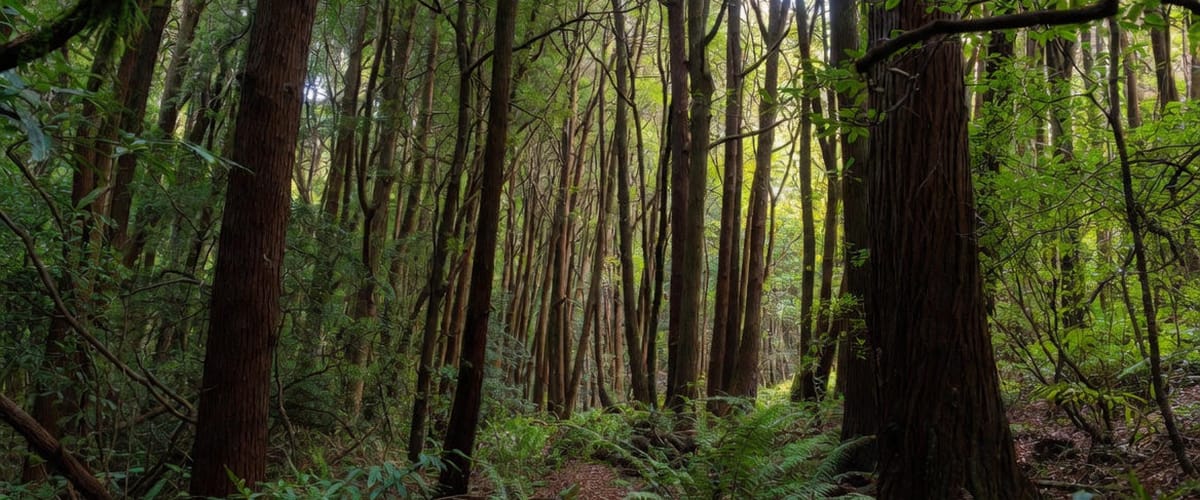
Discover what distinguishes our raw black beech honey from conventional floral honeys—sustainably harvested from New Zealand's ancient forests, emphasising its natural composition, flavour profile, and sourcing advantages.
Pollen-Free Composition
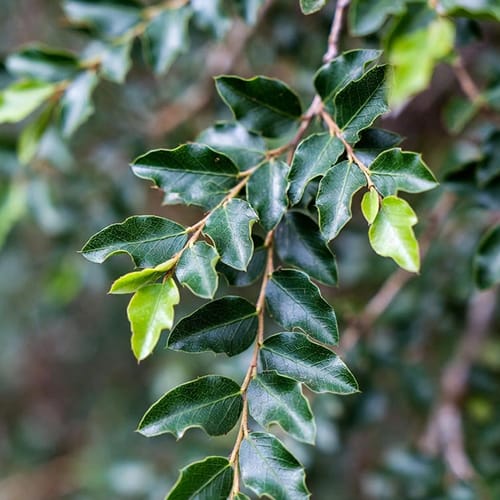
Black beech honey features a pollen-free matrix, contrasting floral honeys with 10-50% pollen from blossoms. Derived solely from bees collecting secretions from scale insects (e.g., Ultracoelostoma assimile) on Nothofagus trees, it skips floral sources. This yields a homogeneous microstructure, silkier viscosity (1.5-2x higher than florals), and cleaner organoleptic profile—lacking herbal variances in pollen-rich honeys. Analyses show darker hues (>100 mm Pfund) and high conductivity (>0.8 mS/cm), highlighting purity for consistent flow and minimal sedimentation. Its singularity boosts malty undertones and batch uniformity, unlike heterogeneous florals.
Rich in Antioxidants & Phenolics
Black beech honey boasts elevated phenolics (200-500 mg GAE/kg)—up to 5x higher than floral honeys (50-100 mg GAE/kg)—mainly phenolic acids like protocatechuic and syringic, not flavonoids. From beech exudate processed by insects and bees, it offers robust antioxidant capacity (10-20 mmol TE/kg via DPPH/FRAP), deep amber colour, and toffee aromas (higher furan/maltol). Sensory tests reveal enhanced persistence and complexity, with malt-caramel notes outlasting floral essences. GC-MS confirms fewer floral terpenes, favouring earthy volatiles for its non-floral terroir—ideal for gourmet infusions.
Higher in Oligosaccharides & Minerals
Black beech honey's oligosaccharides average 5-10% of carbs—far above <2% in florals—mainly melezitose and erlose from scale insect secretions enriched by beech minerals. With high potassium (800-1500 mg/kg) and magnesium (50-100 mg/kg vs. 200-500 in florals), it creates denser thixotropy (~2000-5000 cP viscosity). This synergy amplifies malty caramel bouquet; ICP shows iron/zinc traces modulating pH (4.0-4.5) and acidity (30-50 meq/kg), unlike floral brightness. It ensures shelf liquidity and fuller palate, excelling in blends.
Abundant Amino Acids
Black beech honey holds 15-25 free amino acids (200-500 mg/kg)—more diverse than 10-15 in florals (100-300 mg/kg)—led by proline (40-60%), plus glutamine, phenylalanine, and aspartic from beech proteins. HPLC shows enzymatic breakdown adds umami to caramel-malt notes, without floral sweetness dilution. Tasting panels note better harmony and persistence, suiting cheeses or infusions where florals fade. This complexity affirms its terroir authenticity in premium use.
Lower in Glucose & Sucrose
Black beech honey favors fructose (40-50%) over glucose (25-35%) and trace sucrose (0.8 flow index) and subtle sweetness, ideal for confections without floral melt-overload. Fructose-oligosaccharide blend delivers velvety liquidity from forest alchemy.
Lower Glycemic Index Profile
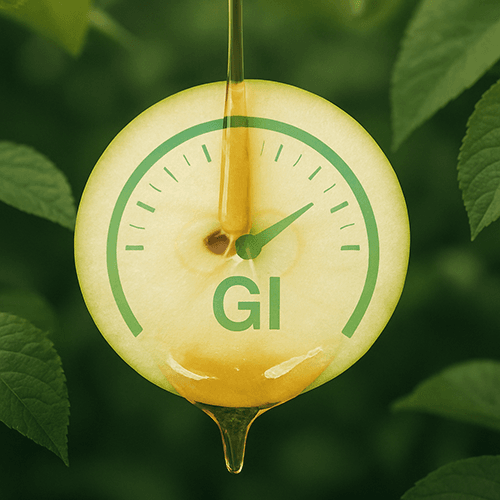
Black beech honey's GI (30-35) stems from fructose dominance (~1.5:1 ratio) and oligosaccharides, versus florals' 40-45 from balanced monosaccharides. Hydrolysis models show slower breakdown via melezitose and low sucrose, yielding gentle sweetness and prolonged aftertaste over floral peaks. This suits balanced formulations without intensity spikes.
Follow @BC Bee Charm Black Beech Honey